
How to Spot a Real Maheshwari Saree
22 October 2026
To identify an authentic handloom Maheshwari saree, look for its signature reversible border, a lightweight silk-cotton blend, and tiny variations across the weave. A genuine handwoven piece feels whisper-light yet structured, with zari borders that look nearly identical on both the right and wrong sides.
Because Maheshwari sarees are celebrated for their understated elegance, powerloom imitations have flooded online marketplaces. Here is how you can tell real handloom craft apart from machine-made copies before making a purchase.
1. Test the reversible border
Historically designed under Queen Ahilyabai Holkar, traditional Maheshwari borders—often called bugdi or patti—are intentionally reversible. The motifs, inspired by the carvings of the Maheshwar Fort, are woven so cleanly that you can drape either side without an obvious underside.
On a handloom, the weaver meticulously interlocks the border threads. In a piece like our handwoven Maheshwari Saree — Grey, both edges show sharp, clean geometry on both the face and the reverse. A powerloom copy will usually have loose floating threads, frayed backing, or a flat single-sided finish.
2. Feel the silk-cotton balance
A classic Maheshwari is defined by its hybrid composition: fine mulberry silk in the warp (lengthwise threads) and soft, high-count cotton in the weft (widthwise threads). This combination gives the saree a natural matte luster combined with breathable coolness.
Machine copies often substitute natural fibers with polyester or synthetic viscose. When you touch a handloom drape like the Maheshwari Silk-cotton Saree — Navy and beige, the fabric feels cool, airy, and gently crisp without feeling stiff or slippery. If a saree feels overly shiny, plastic-smooth, or traps heat immediately against your skin, it is likely synthetic.
3. Look for the gentle handloom rhythm
No handloom saree is mathematically flawless, and that is its greatest beauty. When you hold the saree up to natural light, you should see subtle shifts in thread density and tiny weaver knots along the selvedge.
Powerlooms produce flat, hyper-uniform cloth with rigid tension. In contrast, handloom fabrics breathe. Even in unstitched garments, such as our Maheshwari Suit Set (Unstitched) — Teal and grey, the texture displays a rhythmic human touch—soft yarn variations that make every meter distinct.
4. Examine the zari
Traditional Maheshwari zari has a quiet, refined glow rather than a bright, mirror-like gleam. Weavers in Maheshwar use fine metallic threads that flex naturally with the fabric.
For statement weaves like the Maheshwari Tissue Saree — Teal green, the metallic warp interlaces gracefully with dyed silk wefts. The drape remains fluid rather than crinkly. Imitation tissue and zari from powerlooms often feel abrasive to the touch, shed metallic dust, or leave sharp needle-prick sensations along your waist and shoulders.
5. Check the pallu stripes
A quintessential Maheshwari pallu features five distinct stripes (aarbi stripes)—two white and three colored, or alternating bands of zari and dyed yarn. Handloom weavers carefully switch shuttles to create crisp, defined lines.
Machine-made imitations frequently print or mimic these stripes without proper yarn changes, resulting in bled edges or blurred lines. Inspect product photos closely: real stripes sit flush within the weave, integrated completely into the body of the fabric.
Quick questions
Does an authentic Maheshwari saree wrinkle easily? Because it contains natural cotton in the weft, a genuine silk-cotton Maheshwari will show soft, natural creases during wear. Unlike polyester blends that stay unnaturally rigid, a pure handloom drape responds naturally to movement and softens further after dry cleaning.
How can I verify if a seller weaves their own sarees? Ask transparent questions about loom locations, yarn counts, and weave details. Authentic weaving studios work directly with artisan communities in Maheshwar, Madhya Pradesh, and provide clear close-up images of both the fabric weave and the border reverse.
Is a tissue Maheshwari too stiff for long events? Not if it is handwoven. Authentic handloom tissue combines fine silk with lightweight zari threads, allowing the fabric to mold comfortably around you without the stiffness typical of synthetic powerloom tissue.
Explore our collection of authentic, loom-woven Maheshwari sarees, suits, and kurtas at Zari Buta.
In this article
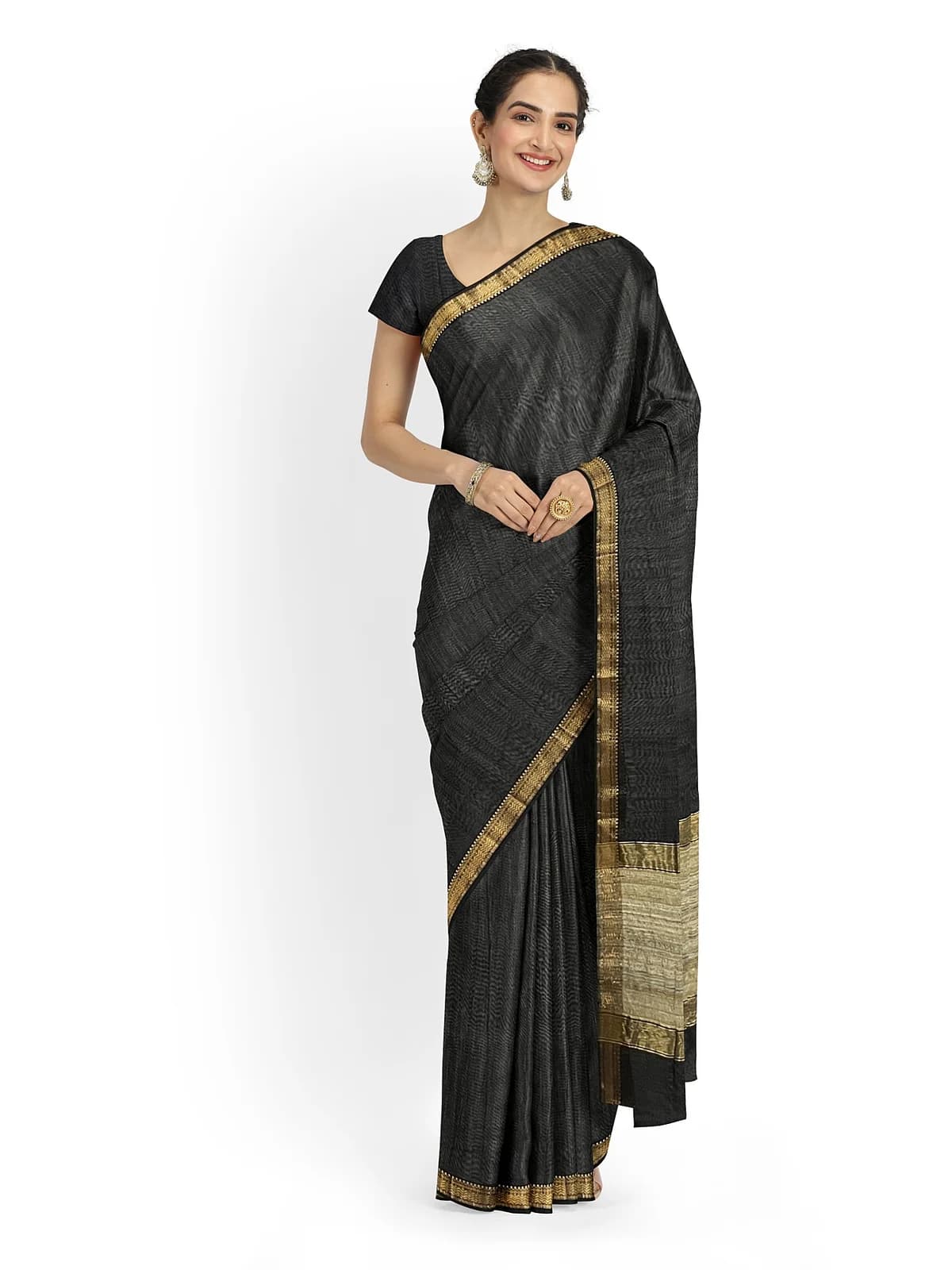
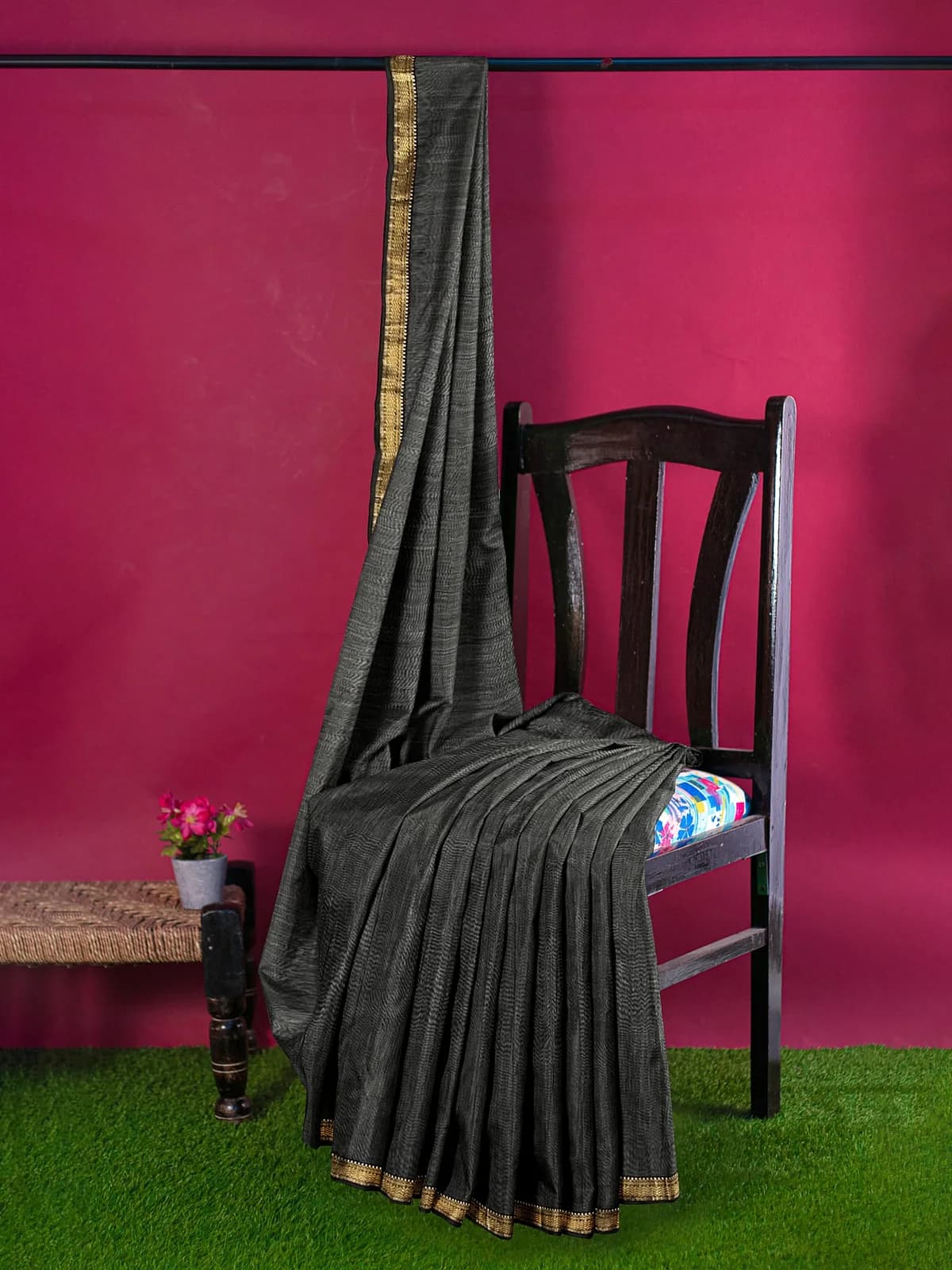
Maheshwari Silk-cotton Saree — Navy and beige
Silk-cotton · Maheshwari
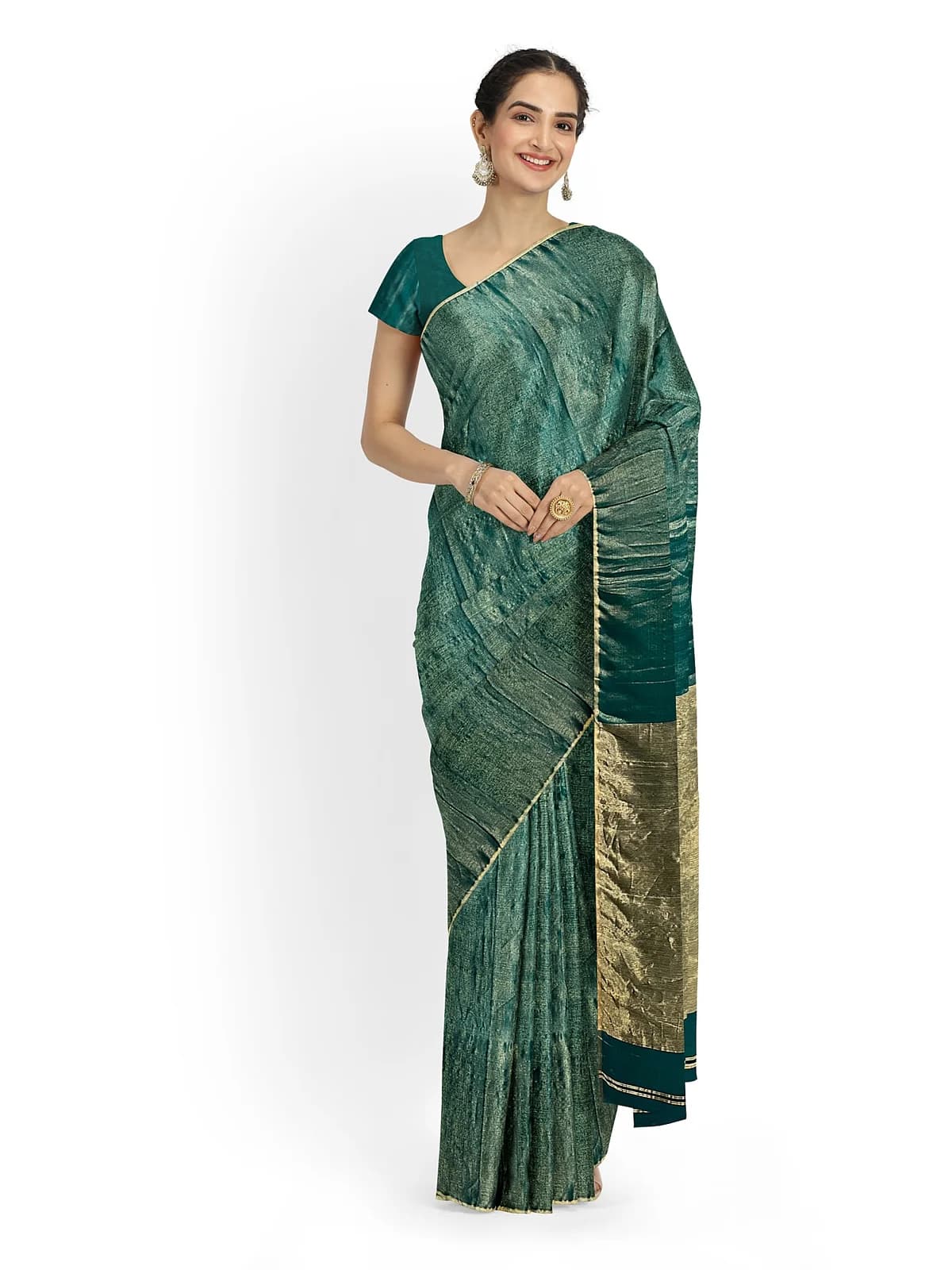
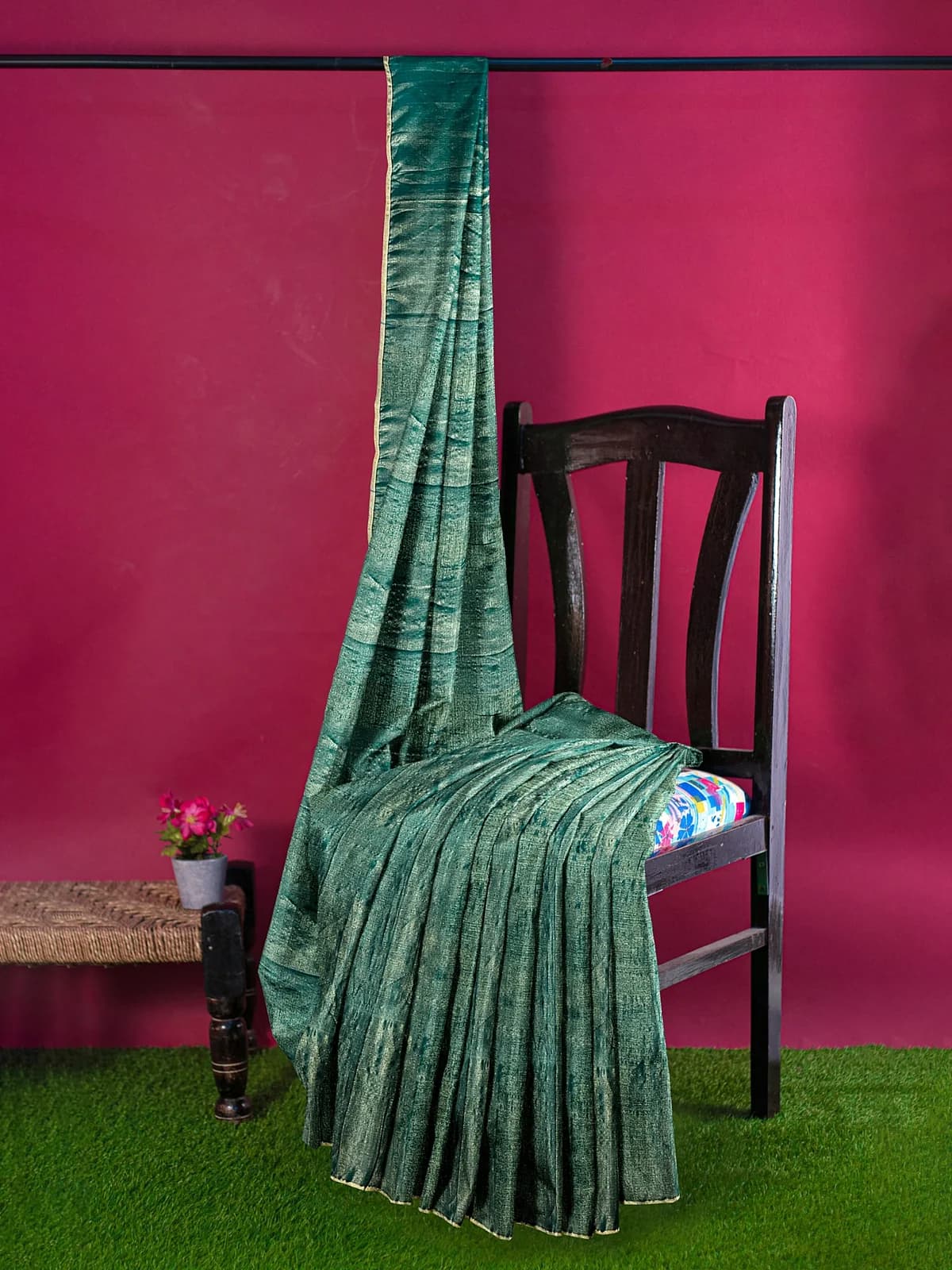
Maheshwari Tissue Saree — Teal green
Tissue · Maheshwari
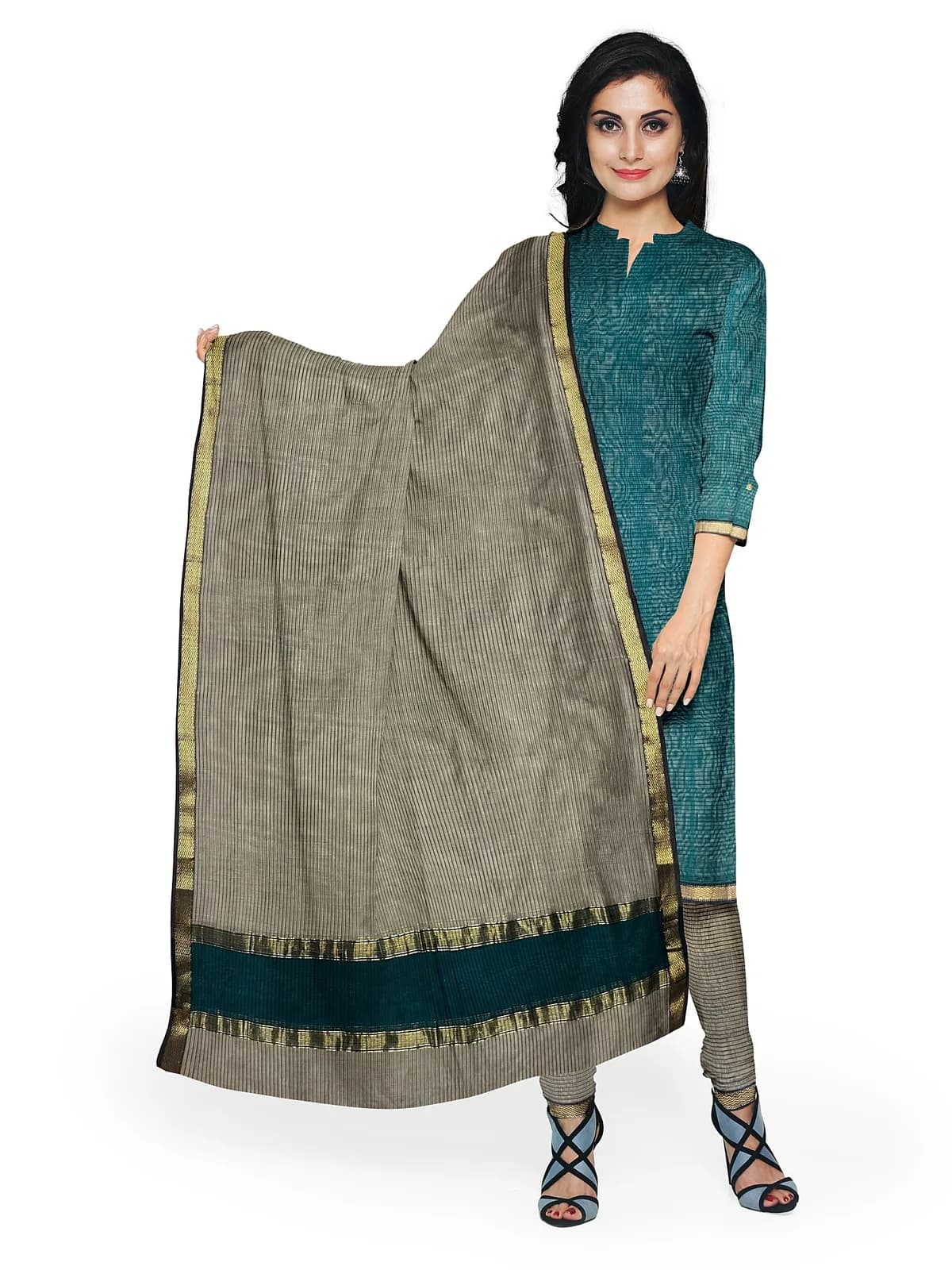
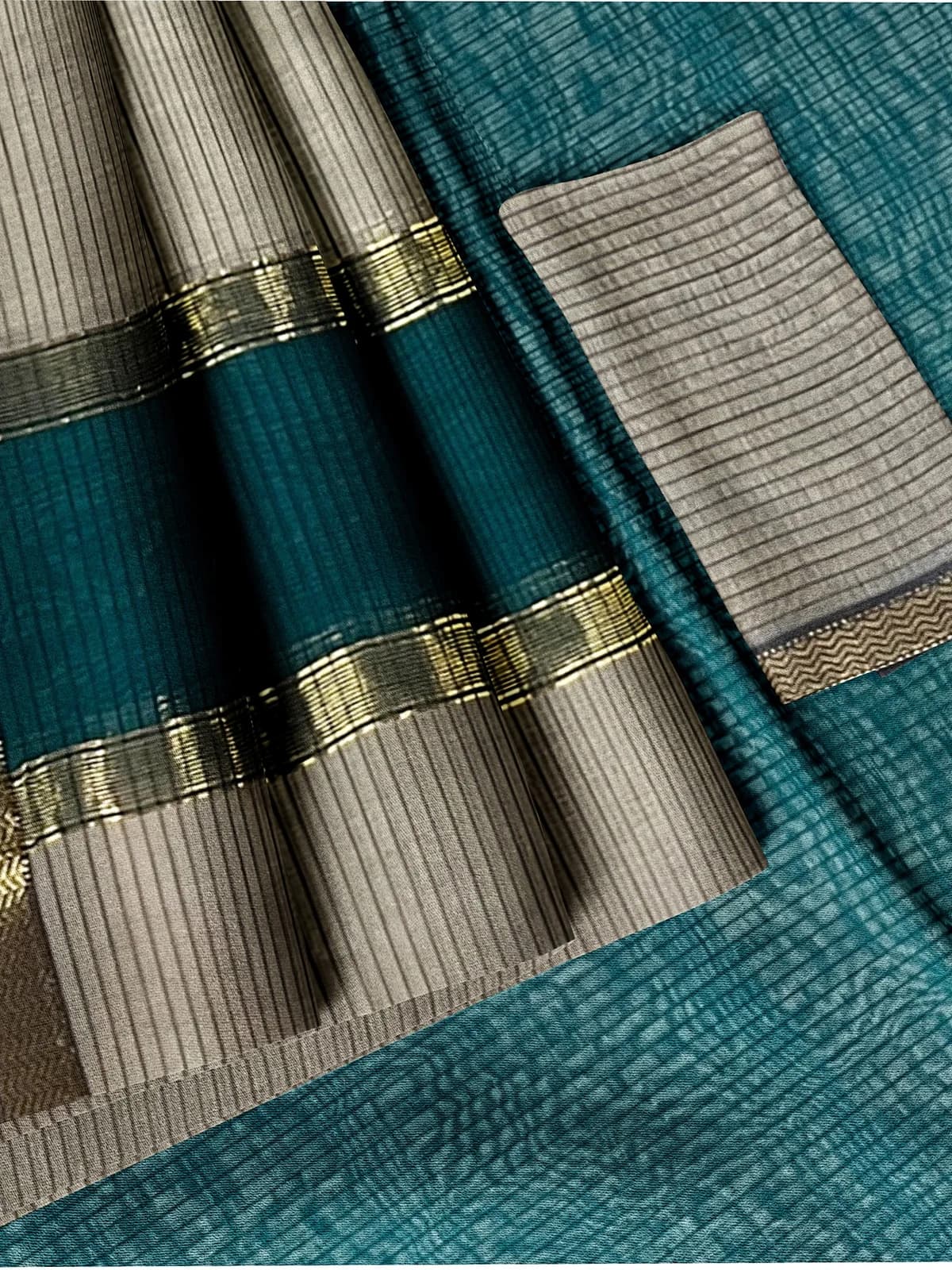
Maheshwari Suit Set (Unstitched) — Teal and grey
Maheshwari
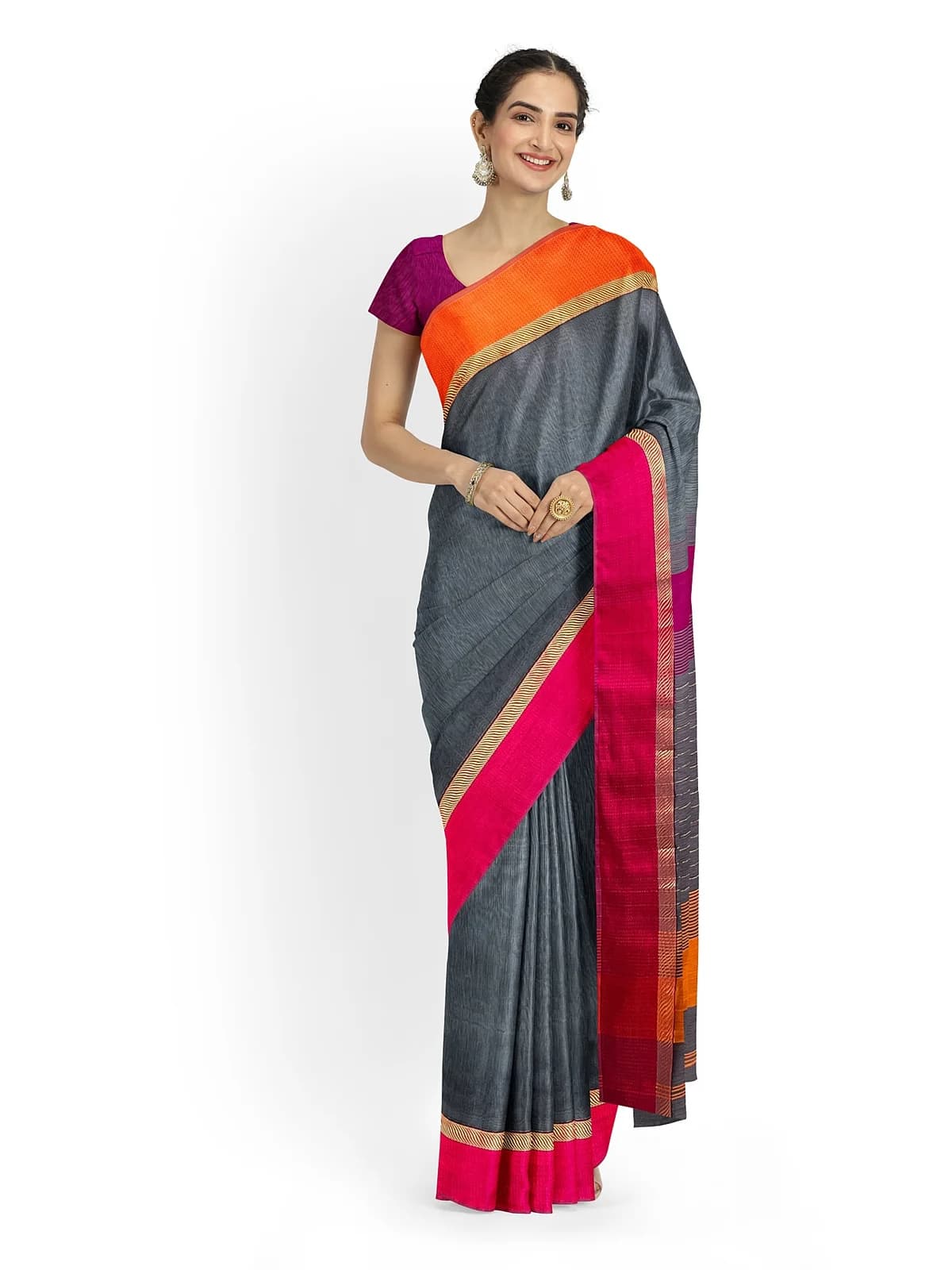
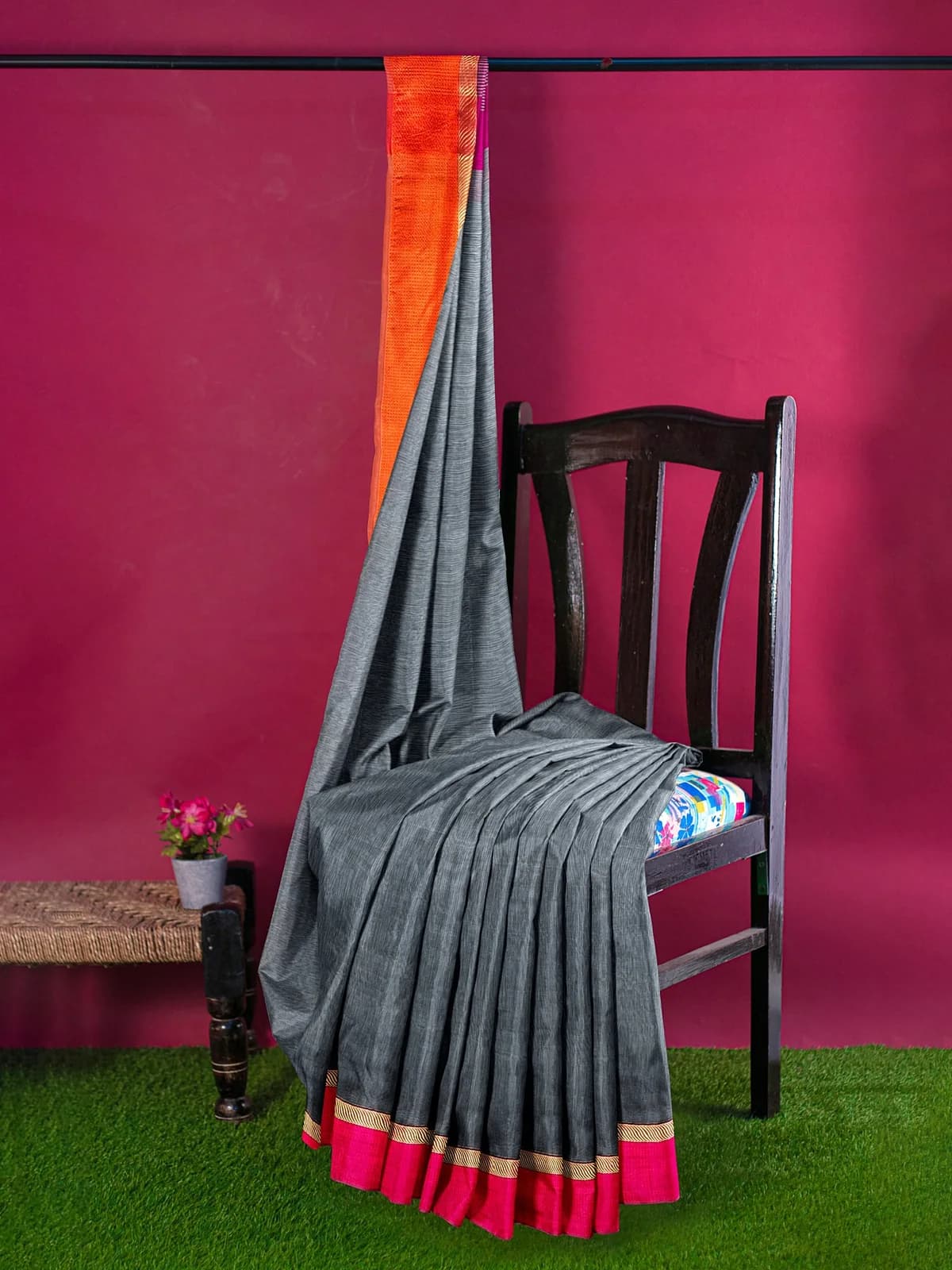
Maheshwari Saree — Grey
Maheshwari